
Studio One Records
There is a building on Brentford Road in Kingston, Jamaica, that changed the sound of the world. It was not a grand building. It was not a famous address, at least not at first. But from the early 1960s onward, through the ska era, through rocksteady, through the golden age of roots reggae and beyond, *Studio One* — the label, the studio, and the vision of one extraordinary man — became the most important institution in the history of Jamaican music. They called it the University of Reggae. That name was not an exaggeration. It was, if anything, an understatement.
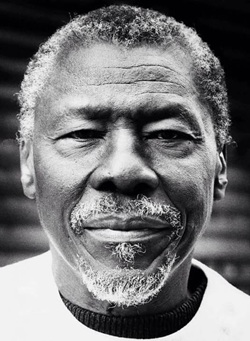
#The Man Behind the Label: Clement Seymour Dodd aka *Sir Coxsone* (1932–2004)#
*Clement Seymour Dodd* was born in Kingston, Jamaica, on January 26, 1932. As a boy he was a skilled cricket player — good enough to earn the nickname *Coxsone* after the Yorkshire and England cricketer Alec Coxon — and carried that competitive instinct into everything he ever built.
In the early 1950s, like many young Jamaicans seeking economic opportunity, Dodd made his way to the United States — working as a labourer on sugar cane plantations in Florida and travelling to cities where he fell deep into the American music scene. He returned to Jamaica with something more valuable than money: a vast record collection, a sophisticated ear, and an understanding of what made people dance. By 1954, he had set up the Sir Coxsone's Downbeat Sound System — and the most important career in Jamaican music history had begun.
#13 Brentford Road: The Address That Made History#
In 1963, Clement Dodd acquired a former nightclub at 13 Brentford Road in Kingston. His father, a construction worker, helped him convert the building into a recording studio. Dodd installed a one-track recording board and began issuing records under the Studio One label. It was — significantly and symbolically — Jamaica's first Black-owned recording studio. In a country that had only recently gained independence from Britain, the act of Black Jamaicans owning the means of cultural production was not merely a business decision. It was a statement.
The studio was modest in its equipment but extraordinary in its atmosphere. Dodd had an instinct — rare in any industry — for finding talent before it had fully announced itself. He listened to artists others dismissed, gave time to musicians who were still learning, and created an environment where experimentation was encouraged and excellence was quietly demanded. The roster of artists who passed through 13 Brentford Road reads like a complete Who's Who of Jamaican music: it is easier to name the great Jamaican artists who did not record at Studio One than those who did.
Dodd also built something beyond just a studio. He implemented a vertically integrated system — combining a record label, a pressing plant, record shops, and a sound system all under one roof and one vision. This model, which gave him control over every step of the music's journey from performance to the listener's ears, became the template that other Jamaican producers would follow for decades. He did not just make records. He built an industry.
#The Artists Coxsone Built#
The list of artists that Clement Dodd discovered, developed, and recorded at Studio One is staggering in its depth and variety. In 1963, a trio of young men from Trenchtown walked into the studio. Their names were Bob Marley, Peter Tosh, and Bunny Wailer — and they called themselves The Wailers. Dodd signed them, trained them in stagecraft and vocal control, and gave them their first professional recordings. The seeds he planted in those early sessions would grow into one of the most celebrated bodies of work in the history of popular music.
Burning Spear — cut his first records at Studio One, beginning the roots reggae journey, Dennis Brown - discovered as a child prodigy, became one of Jamaica's most beloved voices under Dodd's guidance, The Heptones, Marcia Griffiths, Ken Boothe, Delroy Wilson, John Holt, The Cables, The Abyssinians — all passed through Brentford Road, all shaped by what they were taught there.
Even Lee *Scratch* Perry — the eccentric genius who would go on to produce some of the most important reggae and dub records of all time at his own Black Ark studio — served his apprenticeship under Coxsone Dodd. Perry worked at Studio One as a record promoter and session vocalist before developing the production instincts that would make him a legend. Without the education he received at Brentford Road, it is difficult to imagine the Black Ark existing at all.
#Jackie Mittoo and the Sound of Studio One#
No account of Studio One is complete without the name Jackie Mittoo. The Skatalites' keyboard player and one of Jamaica's most gifted musicians, Mittoo became the musical director of Studio One in the mid-1960s and shaped the sound of the label at its most creative and influential point.
It was Mittoo who arranged the sessions, set the tempos, guided the musicians, and created the instrumental frameworks — the riddims — that would underpin decades of Jamaican recording. Dodd's approach to riddims was revolutionary: rather than writing a new backing track for each song, he would create one exceptional instrumental rhythm track and then use it repeatedly, recording multiple singers and vocal groups over the same rhythm track.
Mittoo also introduced two crucial techniques define the Studio One sound. The first provided a delay between instruments that allowed individual guitar strokes to be captured separately — creating the crisp staccato. The second was the Hammond Organ, which brought out Mittoo's innovation. That warm, sustaining, slightly ecclesiastical sound that was Jackie Mittoo's gift.
#Through Every Era: Ska, Rocksteady, Reggae, Dancehall#
What makes Studio One's story uniquely remarkable is not simply what it achieved in any single era — it is that it remained central and vital through every transformation of Jamaican music across more than four decades. Most institutions that define a moment fade with it. Studio One did not fade. It evolved.
During the ska era of the early 1960s, Studio One's recordings with The Skatalites, Toots and the Maytals, and a young Bob Marley set the standard for the genre. As Jamaica slowed down and rocksteady emerged in 1966, it was the musicians and producers at Brentford Road who were central to that transition — including the famous session where Jackie Mittoo slowed the tempo to accommodate a young drummer who could not keep up with ska's pace, and accidentally helped birth a new form. When reggae arrived in 1968, Studio One was there, producing some of the first and finest recordings in the genre.
Even into the 1980s, as dancehall reshaped Jamaican music around digital rhythms and DJ culture, Dodd adapted — working with artists like Sugar Minott, one of the pioneers of dancehall's vocal style, and continuing to release records that found audiences across the spectrum of Jamaican music listeners.
By 1969, the label had become so dominant that it was described as the most influential record label ever created in Jamaica. That assessment has never seriously been challenged.
#The Riddim That Never Dies#
Perhaps Studio One's most enduring and far-reaching contribution to music — beyond any individual artist or album — was the concept and culture of the riddim. Dodd's practice of recording one exceptional instrumental track and building multiple songs on top of it created a shared musical vocabulary that Jamaican artists and producers have been drawing from ever since.
Studio One riddims like Real Rock, Heavenless, and Satta have been versioned, sampled, and rebuilt hundreds of times across five decades of Jamaican music. When you hear a modern reggae or dancehall record built on an ancient-sounding bass line, the odds are strong that its DNA traces back to something recorded at 13 Brentford Road. The riddim system — this creative and economic practice of building a whole ecosystem of songs on one shared foundation — is one of Jamaica's most original contributions to world music culture. And it was born at Studio One.
#The University of Reggae — and What It Produced#
The phrase *University of Reggae* was not coined as flattery. It described something real: the fact that passing through Studio One was, for an entire generation of Jamaican musicians, the equivalent of a musical education. Artists arrived as raw talent. They left as professionals — trained in vocal discipline, musical arrangement, studio behaviour, and the art of making a record that would last.
Coxsone Dodd was not always an easy man to work for. Disputes over royalties were common — many artists felt, with some justification, that they had not received their fair share of what their recordings earned. Some, including Bob Marley, eventually left and found greater financial freedom and creative control elsewhere. The history of Studio One, like the history of any institution that concentrates that much creative power in the hands of one person, is not without its shadows.
But what Dodd built at Brentford Road endures beyond any dispute. He created the first Black-owned recording studio in Jamaica. He gave a generation of artists their start. He invented the riddim system. He documented ska, rocksteady, and reggae at their moment of creation with a consistency and quality that has never been equalled. He trained the producers — including Lee Perry — who would define the next chapter of the music. And he did it all from a converted nightclub on a Kingston side street, driven by nothing more complex than a lifelong love of music and a competitive instinct that would not let him settle for second best.
The street outside his old studio at Brentford Road was later renamed Studio One Boulevard in his honour. It was the least Jamaica could do for the man who, more than any other single person, gave the island its musical voice.